
 0
0 
On Saturday, September 22nd at 8:49 AM Mountain Daylight Time, we celebrate the Fall Equinox as the sun crosses the celestial equator making its journey south towards the winter solstice (the shortest day of the year).
Read More»
0 
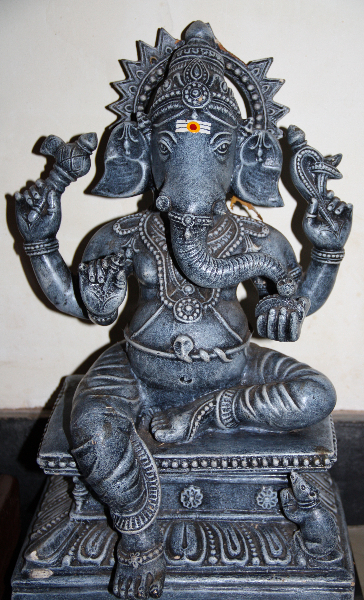
Celebrated as Ganesha’s birthday, Ganesha “Chaturthi” (which literally means the fourth) refers to the fourth day after the new moon of the lunar month Bahdrapada, which usually falls around August-September.
Read More» 0 
So here we are in the dog days of summer. As the heat and humidity go up in the world around us, so does Pitta within us. Have you felt any of the following signs of high Pitta recently?
0 
However, when a Kapha individual becomes out of balance they are more likely to develop diseases connected to the element of water such as, flu, congestion, excess mucus, and weight gain. And as we have discussed, Kapha dosha is also made up of the earth element and can therefore result in imbalances that make the body solid, e.g., tumors, gallstones, and kidney stones.
Read More» 0 
Today we’ll celebrate the sweet love and divine grace of Kapha Dosha.
Kapha is made up of the elements Water and Earth.
In Sanskrit the term Kapha कफ means flourished by water.
Kapha in the body governs structure and support, a dosha relatively underdeveloped in our culture, especially in comparison to the overly celebrated multitasking of Vata and intense drive of Pitta.
Read More» 0 
In human beings, Pitta’s primary responsibility is to coordinate digestion and healthy body temperature.
However, when Pitta dosha gets elevated above an individual’s unique “norm,” then signs of heat emerge: diarrhea, fever, inflammation, irritation, hot flashes, and rashes are common Pitta symptoms.
In the mental-emotional realm, aggravated Pitta can create anger, irritation, annoyance, rage, and a shorter fuse than usual.
Read More» 0 
In the last few posts, we’ve been learning about Vāta Dosha, the energy of Ether (Space) and Air. Today, we dive into the fire of Pitta Dosha.
In Sanskrit the term Pitta पित्त comes from the word tapa, meaning heat or concentration.
Read More» 0  0
0 
Vāta is the energy of Ether (Space) and Air.
The Sanskrit term vāta वात is related to the verb vah, meaning vehicle, to carry or move.
Vāta is present in movement, circulation & rhythm of the world around us and in our body and mind.
Read More» 4 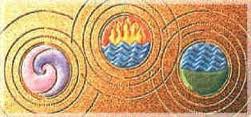
A foundational concept of Ayurveda that has no parallel in Western science is the theory of the tridosha. The word dosha refers to an organizing principle or pattern in nature. The ancient teachers of Ayurveda noticed that certain constellations of qualities show up in nature together and move in predictable ways with predictable outcomes.
They observed three primary forces in the world, and they correspond to the major elements. Since there is no parallel in English, we still use the Sanskrit terms for these organizing principles: Vāta, Pitta and Kapha.
Read More»